Calendula Supplements: Oral vs. Topical Evidence
Calendula is familiar in skin products, but evidence or traditional use for a topical preparation is not proof that an oral calendula supplement supports lymphatic drainage.
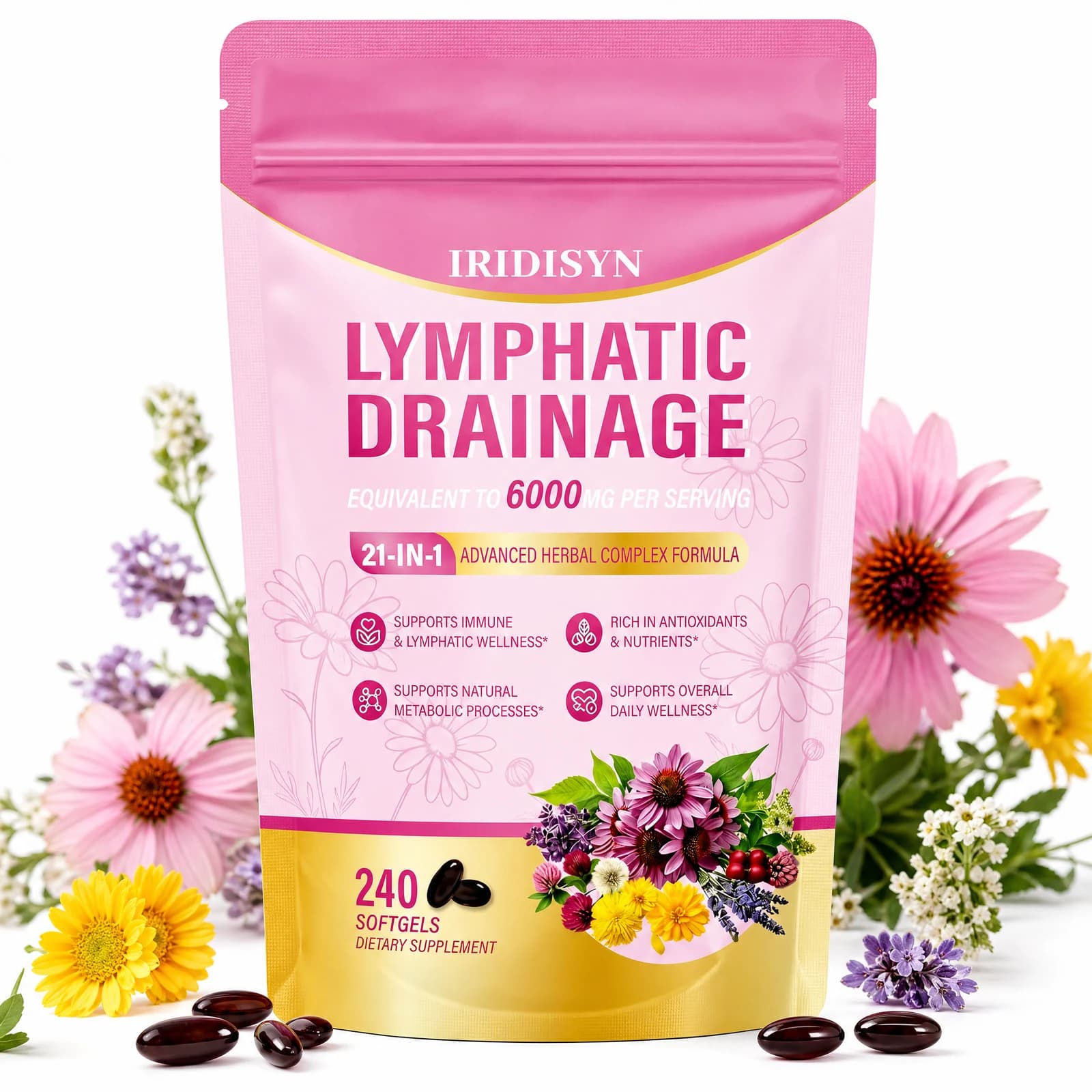
IRIDISYN-supplied product artwork. Package claims are not clinical evidence; compare the final label. No stock or AI-generated botanical photograph is used.
Educational content only. This page does not diagnose or treat lymphedema, swelling, or any other medical condition. New, persistent, painful, red, warm, or one-sided swelling should be assessed by a qualified healthcare professional.
Key takeaways
- Confirm Calendula officinalis rather than relying on the common name marigold.
- Topical, mouth-rinse, and swallowed preparations are different routes.
- A traditional-use monograph is not an approval of an American supplement.
- Keep skin-care findings separate from claims about an oral blend.
Calendula flower and the supplement label
The European Medicines Agency identifies calendula flower as Calendula officinalis L. Its summary concerns specified flower preparations. A common name such as marigold is not enough to establish the species or preparation in a supplement.
For an oral blend, look for the botanical name, plant part, and extract description. If the catalog says calendula extract but the final panel does not state the part, record the missing information. Do not borrow a flower-specific study to fill that gap.
Why the route of use matters
EMA's traditional-use conclusions concern certain preparations for minor skin inflammation, minor wounds, and mouth or throat inflammation. They do not establish a lymphatic benefit from swallowing a multi-botanical softgel.
Our interpretation: route is an essential part of an evidence match. Applying a preparation to skin, rinsing the mouth, and swallowing it ask different biological and safety questions. An ingredient name shared across those products does not make their supporting evidence interchangeable.
Traditional use is a specific category, not a shortcut
EMA distinguishes long-standing use from sufficient clinical evidence for well-established medicinal use. Its calendula summary is not a recommendation for every calendula preparation or a U.S. regulatory approval.
Read the scope before reading a marketing quotation from the monograph. Which preparation is covered? Which route? Which purpose? Does the summary cover a combination product? Those questions make a citation useful instead of merely impressive-looking.
How to compare an oral calendula formula
Compare the actual amount per serving and whether it is disclosed individually or only within a blend. Next compare the extraction description. A ratio can describe the starting-material relationship without telling you the concentration of a specific constituent.
If you are considering a topical product as well, put it in a different comparison sheet. Do not add its percentage to an oral milligram amount or use its directions to decide how many softgels to take. Maintain the product's intended route and final instructions.
Allergy and intended-use checks
EMA notes skin sensitization and cautions against covered preparations in people allergic to plants in the Asteraceae family. That observation should prompt a preparation-specific discussion, not a blanket assumption that all oral formulas have the same risk profile.
Never swallow a product labeled only for external use. For a dietary supplement, bring the full formula to a pharmacist or clinician if allergy history, medicines, pregnancy, or a health condition raises a question. Do not treat symptoms after use as evidence of detoxification.
A practical two-label comparison
Put the complete labels side by side, not just the front panels. Write down the botanical name and part, preparation, declared amount per serving, and any disclosed marker compound. Leave an empty field marked unknown; do not fill it with an assumption from a similar-looking bottle.
Then write the question you want the product to answer. A readable ingredient list answers what is declared in the formula. It does not answer whether that formula has been tested for your intended outcome. Keeping those questions separate prevents a familiar plant name from doing the work of a clinical study.
| Record | Why it matters | If missing |
|---|---|---|
| Species and plant part | Similar common names can describe different preparations | Ask for the complete ingredient statement |
| Amount per labeled serving | One capsule or one drop may not be a serving | Do not estimate from package size |
| Extract and marker details | A ratio is not a measured active-compound percentage | Treat composition as unresolved |
| Finished-product evidence | An ingredient paper is not automatically a formula trial | Do not assume the claimed outcome |
Questions to take to your pharmacist or clinician
Bring photographs of all label panels and a list of medicines and other supplements. Ask about this complete formula rather than asking only whether the plant is natural. State why you are considering it, whether you have symptoms, and whether any prescribed care would change. This page does not set a personal serving or duration.
- Does the exact preparation change the safety discussion?
- Do any ingredients duplicate another product I use?
- Is there a reason to avoid this formula given my medical history?
- Which symptom would mean stopping rather than increasing the serving?
IRIDISYN label context: calendula
The following information is drawn from the current product catalog. Inclusion in a formula is not evidence that the ingredient or finished product improves lymphatic drainage.
| Formula | Package | Catalog serving information |
|---|---|---|
| 21-in-1 Softgels: compare the complete label | 240 softgels | 3 softgels · 80 servings |
These are multi-ingredient dietary supplements, not single-herb medicines. Confirm botanical identity, amounts, other ingredients, warnings, and suggested use on the final package. A generic dropper-format description is not a verified liquid dose.
Frequently asked questions
What is a calendula supplement good for?
Its purpose must be evaluated against the exact oral preparation and claim. Traditional topical use does not establish an oral lymphatic effect.
Is calendula the same as every marigold?
Do not rely on that common name. Look for Calendula officinalis and the specified plant part on the ingredient statement.
Can topical calendula research support a capsule claim?
Not on its own. Route, preparation, dose, participants, and outcome all need to match the claim.
Does EMA approval apply to IRIDISYN?
No. Citing EMA's herbal information does not certify or approve an IRIDISYN product.
Can I swallow calendula skin oil?
No—do not repurpose a product labeled for external use as an oral supplement.
- EMA: Calendula flowerSpecified preparations, traditional-use scope, route, and allergy cautions.
- NIH ODS: Dietary Supplements — What You Need to KnowLabel, quality, and safety background; not an endorsement of this brand.
- NCCIH: Using Dietary Supplements WiselyHow to evaluate evidence and discuss supplements with a healthcare professional.
- FDA: Questions and Answers on Dietary SupplementsThe distinction between a dietary supplement and an approved medicine.
- National Cancer Institute: LymphedemaClinical care context; ingredient inclusion is not lymphedema treatment.
Sources are provided for transparency and further reading. Linking to an external source does not mean that the source endorses IRIDISYN or any IRIDISYN product.
Published by a supplement brand, not an independent clinical review service. Read our editorial standards or report a correction.