Lymphatic Support: Supplements, Daily Habits and Safety
A practical, evidence-aware starting point for understanding the lymphatic system, evaluating supplement language, and knowing when swelling belongs in a healthcare conversation.
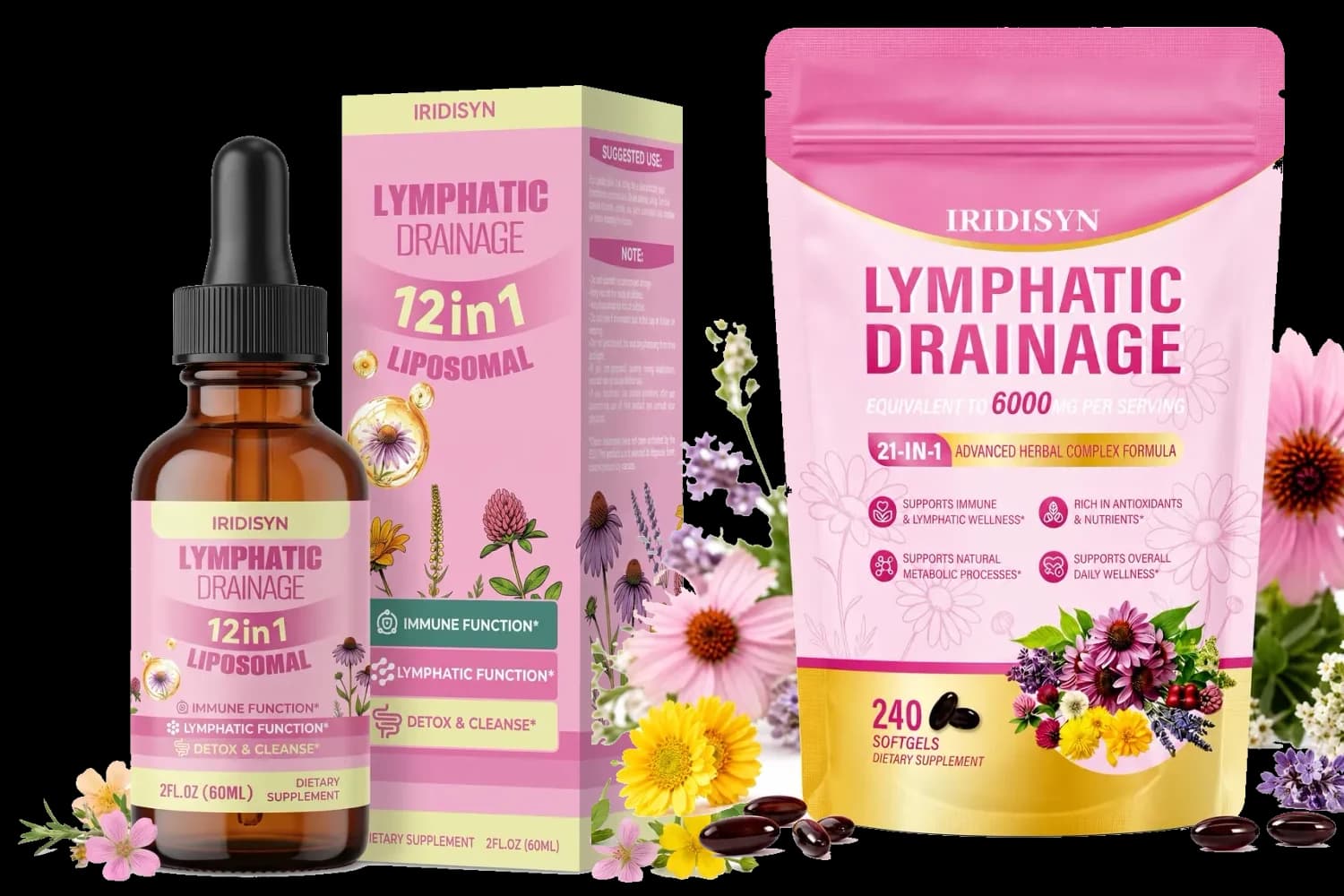
IRIDISYN original product photography.
Educational content only. This page does not diagnose or treat lymphedema, swelling, or any other medical condition. New, persistent, painful, red, warm, or one-sided swelling should be assessed by a qualified healthcare professional.
Key takeaways
- The lymphatic system is part of circulation and immune function; it is not a vague detox pathway that can be switched on by one product.
- Dietary supplements marketed for lymphatic support are not the same as medical treatment for lymphedema or unexplained swelling.
- The strength of a claim should match the strength and relevance of the evidence for the exact ingredient, dose, preparation, and outcome.
- Persistent, painful, red, warm, sudden, or one-sided swelling needs professional assessment rather than self-treatment with a supplement.
What the lymphatic system actually does
The lymphatic system is a network of small and large vessels, lymph nodes, and lymph-related organs. It collects excess fluid and large molecules from spaces between cells, moves that fluid through lymphatic vessels, and ultimately returns it to the bloodstream. Lymph nodes also participate in immune surveillance by filtering lymph and bringing immune cells into contact with material carried through the system.
Lymph does not circulate because of a single central pump like the heart. Flow is influenced by one-way valves in larger lymphatic vessels, contraction of vessel walls, breathing, and movement of surrounding muscles. That physiology helps explain why normal movement matters, but it does not prove that a tea, tincture, drop, or capsule can accelerate lymph flow in a clinically meaningful way.
The system also has a role in absorbing dietary fats from the small intestine. These functions—fluid balance, immune activity, and fat absorption—are related but not interchangeable. A study involving one function should not automatically be presented as evidence for another.
Lymphatic support is not lymphedema treatment
Wellness marketing often uses phrases such as lymphatic support, lymphatic drainage, fluid balance, detox, or cleanse. These phrases can describe a product category or consumer goal, but they do not diagnose a condition and they do not tell you that a product has been shown to alter lymphatic flow.
Lymphedema is a specific medical condition in which disruption of normal lymphatic drainage leads to accumulation of protein-rich fluid in tissues. It can occur after lymph node surgery or radiation, because of cancer or infection, or for other medical reasons. It requires assessment because swelling can have many possible causes and because untreated lymphedema can lead to complications.
Evidence-based lymphedema management may include compression, exercise, skin care, and manual lymphatic drainage delivered or taught by a trained professional. The National Cancer Institute’s patient guidance describes these as parts of clinical care. A dietary supplement should not be presented as a substitute for that plan.
How to read evidence behind a lymphatic-support claim
The first question is not whether an ingredient sounds plausible. It is whether the claim was tested directly. A laboratory experiment can show that a plant extract affects cells in a dish. An animal study can explore a biological mechanism. Traditional use can document how a plant was historically prepared. None of those, by itself, proves that a finished supplement improves lymph flow, treats swelling, or produces a visible change in people.
Human studies are more relevant, but their design still matters. Look for an appropriate comparison group, enough participants, a clearly defined outcome, and a product that resembles the one being sold. Results from a concentrated single-ingredient extract cannot simply be transferred to a low-dose multi-ingredient blend. Results for a leaf cannot be transferred to a root, and results from topical use cannot establish an oral benefit.
Finally, check whether the outcome matches the marketing. A change in a laboratory marker is not the same as reduced swelling. Increased urine output is not the same as improved lymphatic drainage. Feeling less puffy is subjective and can be influenced by sodium intake, hormones, sleep, temperature, activity, medications, and many health conditions.
A useful evidence hierarchy
For practical decisions, place the most weight on well-designed human trials and systematic reviews that examine the same preparation and outcome. Treat observational findings, traditional use, animal studies, and laboratory research as context—not confirmation of a finished product’s benefit.
- Direct human evidence for the exact formulation and intended outcome
- Human evidence for the same ingredient, plant part, preparation, and dose
- Indirect human evidence for a related outcome
- Traditional use, animal research, or laboratory findings
- Marketing language without a traceable source
How to evaluate a lymphatic-support supplement
Begin with the Supplement Facts panel and the complete ingredient list. A large number on the front of a package may describe the total blend, a raw-herb equivalent, or a marketing total rather than the amount of every botanical. The label should make clear what the serving is, which ingredients are present, how much is present when an amount is declared, and whether a proprietary blend limits what you can learn about individual quantities.
Botanical identity matters. A useful label identifies the common or Latin name when appropriate, the plant part, and whether the ingredient is a powder or extract. An extract ratio such as 10:1 describes how starting material relates to extract; it does not automatically establish potency, absorption, quality, or clinical effectiveness.
Use our Supplement Facts label guide to review serving size, amounts, Daily Value, proprietary blends, and other ingredients before comparing products.
| Check | What to look for | Why it matters |
|---|---|---|
| Identity | Species or common name and plant part | Different species and plant parts can have different constituents and evidence. |
| Preparation | Powder, liquid, standardized extract, or extract ratio | Research on one preparation may not apply to another. |
| Amount | Amount per labeled serving | A blend total may not disclose each ingredient’s quantity. |
| Directions | Clear serving and use instructions | More is not automatically better or safer. |
| Warnings | Allergens, interactions, age, pregnancy, and storage statements | Individual risk depends on health status, medicines, and formulation. |
| Claims | Specific language with relevant support | Broad promises such as detox or unclog are not meaningful clinical outcomes. |
Everyday habits that fit an evidence-aware approach
For generally healthy adults, ordinary behaviors are a more grounded place to begin than a cleanse. Regular movement uses muscle contraction and breathing, both of which participate in normal fluid movement. The goal does not need to be an extreme workout: walking, changing position during a sedentary day, and following activity advice that is appropriate for your health can all be part of a sustainable routine.
Adequate hydration supports normal body function, but forcing excessive water does not flush or reset the lymphatic system. People who have been told to limit fluids because of a heart, kidney, or other condition should follow their clinician’s instructions rather than generic wellness advice. The same principle applies to sodium: dietary needs and restrictions are individual.
Skin care is especially important for people diagnosed with or at risk for lymphedema because breaks in the skin can increase infection risk. Anyone managing diagnosed lymphedema should follow the plan provided by their physician or certified lymphedema therapist, including instructions for compression garments, exercise, or self-massage.
- Choose regular, appropriate movement over occasional extreme routines.
- Treat sleep, meals, hydration, and activity as foundations—not as a cleanse protocol.
- Do not perform aggressive massage over unexplained swelling or an area with redness, heat, infection, a suspected clot, or recent surgery without professional guidance.
- Keep an up-to-date list of supplements and medicines for healthcare appointments.
When swelling needs medical attention
Swelling is a symptom, not a diagnosis. It can relate to injury, infection, a blood clot, venous problems, heart or kidney conditions, medication effects, hormonal changes, lymphatic disruption, and other causes. A product review, online quiz, or supplement label cannot determine the cause.
Contact a healthcare professional when swelling is new, persistent, worsening, painful, or noticeably different on one side. After lymph node surgery, cancer treatment, or a known risk of lymphedema, report heaviness, tightness, or swelling early because management is often easier when it begins promptly.
Redness, warmth, tenderness, and fever can signal cellulitis, a potentially serious infection associated with lymphedema. The National Cancer Institute advises contacting a doctor right away for fever or other signs of cellulitis. Do not delay care while trying a drainage tea, massage tool, or supplement.
Choose the next question, not the biggest promise
If you are evaluating a liquid formula, start with Do lymphatic drainage drops work? It explains what can and cannot be concluded from ingredient research and why a delivery-format claim needs its own support.
If your priority is risk, read the guide to lymphatic drainage supplement side effects. If you are comparing marketing outcomes, use the benefits claims-versus-evidence guide. For a practical format choice, compare drops versus pills.
If you are ready to compare products, use the evidence-aware supplement buying guide. To inspect the formula itself, open the lymphatic supplement ingredient guide, then continue into the profiles for cleavers, dandelion, and burdock root.
After applying those criteria, compare the catalog-backed package and formula details for the IRIDISYN 12-in-1 liquid drops and the IRIDISYN 21-in-1 softgels. The two pages describe different formulas and do not position either format as medical treatment.
For practical use, begin with how to take lymphatic drainage drops, then review when to take them, how long results may take, daily-use safety, and the before-and-after tracking guide.
For non-supplement approaches, start with natural lymphatic support foundations, then explore food and fluid choices, movement and exercise, the evidence for dry brushing, and the safety boundaries around lymphatic drainage massage at home.
A useful decision does not require certainty that a supplement will deliver a dramatic result. It requires an accurate label, realistic expectations, an acceptable safety profile, and a clear understanding of what the product is not intended to do.
Frequently asked questions
What is lymphatic support?
Lymphatic support is a broad wellness phrase rather than a medical diagnosis or standardized treatment category. It may refer to movement, hydration, professionally guided lymphedema care, or supplements marketed with fluid-balance and drainage language. The meaning should be made specific each time it is used.
Can a supplement unclog the lymphatic system?
No over-the-counter supplement should be assumed to unclog lymph vessels. A true lymphatic obstruction or persistent swelling needs medical evaluation. Product evidence must directly support the formulation and outcome being claimed.
What is the difference between puffiness and lymphedema?
Puffiness is an informal description with many possible causes. Lymphedema is a medical condition involving impaired lymphatic drainage and tissue changes. Appearance alone is not enough to diagnose the cause of swelling.
Is lymphatic drainage massage the same as taking a supplement?
No. Manual lymphatic drainage is a specialized gentle technique used as part of some clinical lymphedema programs and should be taught or delivered by an appropriately trained professional. A supplement is an ingested product with different evidence and risks.
Where should I start when comparing products?
Start with serving size, the complete ingredient list, declared amounts, botanical species and plant parts, preparation type, warnings, and whether the claims match relevant human evidence. Do not rely on the number of ingredients or front-label language alone.
- National Cancer Institute: LymphedemaPatient guidance on symptoms, diagnosis, treatment, self-care, and urgent infection signs.
- National Cancer Institute: Lymphedema (Health Professional Version)Clinical background on lymphatic anatomy, lymphedema, risk factors, and management.
- NCCIH: Using Dietary Supplements WiselyConsumer guidance on supplement evidence, safety, quality, and healthcare conversations.
- NIH Office of Dietary Supplements: Dietary Supplements—What You Need to KnowAn overview of dietary supplement labels, regulation, safety, and quality.
- FDA: Dietary Supplement Labeling GuideFDA guidance covering Supplement Facts and other required label information.
- Federal Trade Commission: Health Products Compliance GuidanceGuidance on competent and reliable substantiation for health-related advertising claims.
Sources are provided for transparency and further reading. Linking to an external source does not mean that the source endorses IRIDISYN or any IRIDISYN product.