Burdock Root for Lymphatic Support: Uses, Evidence and Safety
Burdock root has a long food and herbal history, but detox and lymphatic claims often travel farther than the human evidence. A closer look at identity, preparation, and safety makes the distinction clear.
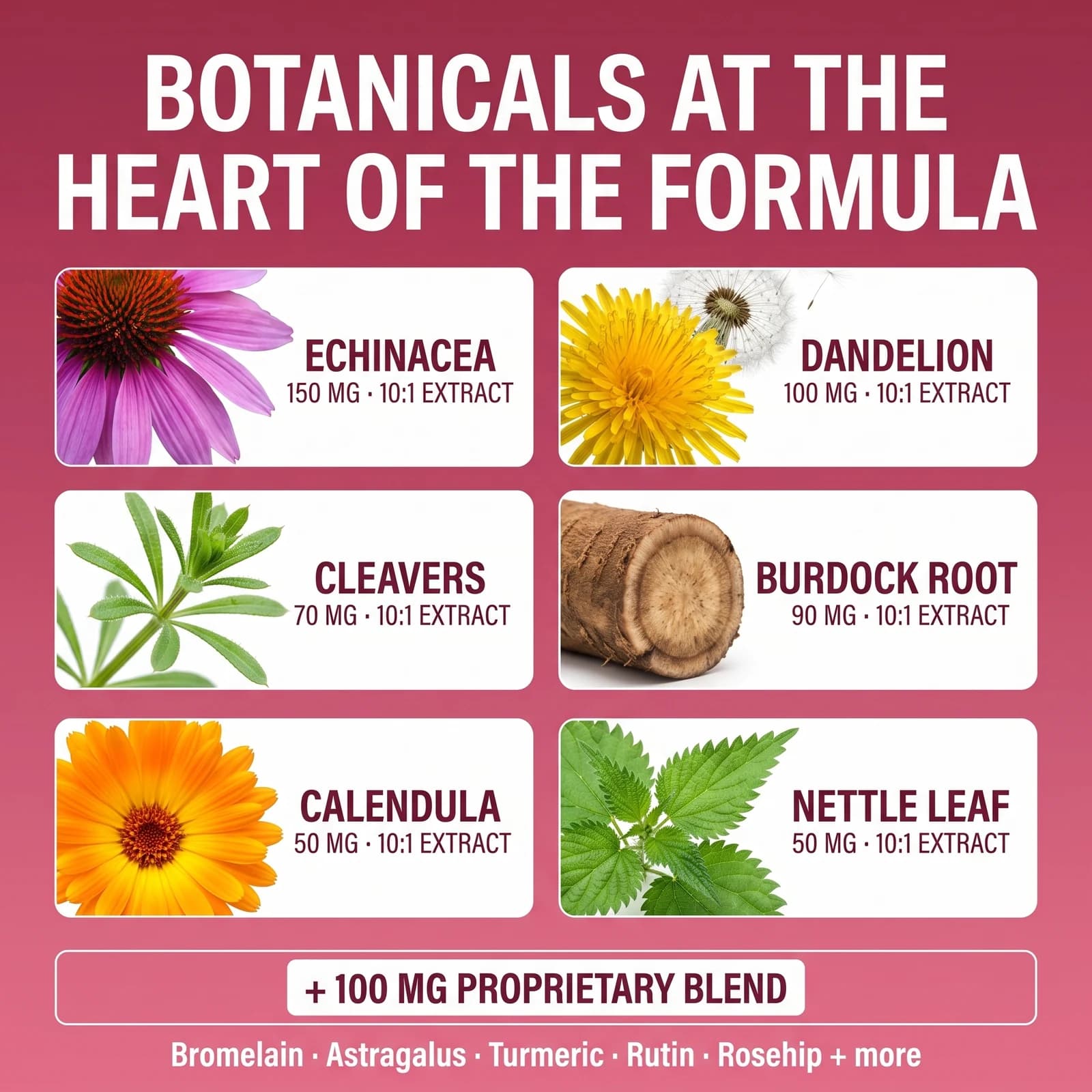
IRIDISYN original product artwork; shown for ingredient context, not as clinical evidence.
Educational content only. This page does not diagnose or treat lymphedema, swelling, or any other medical condition. New, persistent, painful, red, warm, or one-sided swelling should be assessed by a qualified healthcare professional.
Key takeaways
- Burdock used as food, tea, powder, or concentrated extract represents different exposures and should not be treated as one interchangeable ingredient.
- Official monographs document traditional uses for specific preparations; they do not establish burdock as a treatment for lymphedema or blocked lymph.
- Laboratory and animal findings cannot prove that a finished oral supplement delivers a lymphatic or detox benefit in people.
- Botanical identity, contamination control, allergy history, pregnancy, medical conditions, and medicines all belong in the safety review.
What is burdock root?
Burdock generally refers to plants in the Arctium genus; Arctium lappa is a species commonly used in foods and herbal products. The root is eaten as a vegetable in some cuisines and is also sold as dried root, tea, powder, tincture, and extract.
A history of food use does not make every concentrated preparation equivalent to food. Extraction changes what is concentrated, and serving size changes exposure. A complete label should identify Arctium lappa, the root, the preparation, and the amount per serving.
Traditional use versus a modern lymphatic claim
Burdock has been used traditionally in preparations associated with digestion, urinary function, skin complaints, and broad ideas such as purification or cleansing. Modern product language may translate that history into detox or lymphatic support.
The translation can be misleading if it implies a measured modern outcome. Traditional use does not demonstrate increased lymph flow, reduced limb volume, removal of an undefined toxin, or treatment of a medical condition. It documents how a substance has been used, not the result of a controlled trial.
The European Medicines Agency monograph describes traditional-use indications for specific burdock-root preparations. Traditional-use status is not the same as well-established clinical efficacy, and the monograph should not be stretched to cover different products or lymphatic outcomes.
What research can and cannot tell us
Burdock constituents have been studied in cell and animal models for antioxidant, inflammatory, metabolic, and antimicrobial activity. These studies can generate hypotheses, but they do not show that an oral burdock supplement drains lymph or treats swelling in people.
Memorial Sloan Kettering notes that evidence does not support burdock for several promoted medical uses and that confirmatory human studies are needed. Small studies of different conditions or topical formulas cannot validate a multi-botanical lymphatic product.
| Marketing step | Question to ask | Why it matters |
|---|---|---|
| Burdock contains studied compounds | Were they studied in people after oral use? | Cell exposure may not occur in the human body |
| A study found an effect | Was the outcome lymph flow or clinically diagnosed swelling? | Unrelated outcomes cannot validate a lymphatic claim |
| Burdock has traditional detox use | What substance and measurable outcome does detox mean? | Undefined claims cannot be meaningfully tested |
| The formula contains burdock | Does the product match the studied species, part, extract, and amount? | Ingredient presence alone is not product evidence |
Why detox language needs a definition
The body uses the liver, kidneys, lungs, gastrointestinal tract, skin, and lymphatic system in different aspects of metabolism, excretion, defense, and fluid balance. Calling a product a detoxifier does not identify which substance is being removed, how removal is measured, or whether the change benefits health.
A meaningful claim should name the outcome, population, serving, timeframe, and evidence. Without those details, phrases such as cleanses the lymph or removes toxins are not useful guides for selecting burdock or any other botanical.
Safety, allergy, and product-quality concerns
Burdock belongs to the Asteraceae family, so allergy and cross-sensitivity may be relevant for some people. Memorial Sloan Kettering describes reports including allergic reactions and notes concern about contaminated herbal tea. A case report does not define the frequency of an event, but it shows why identity and quality control matter.
The EMA monograph advises against use in pregnancy and lactation for the medicinal preparations it assesses because adequate data are lacking. People using medicines, especially for blood glucose or other chronic conditions, should ask a pharmacist or clinician to review the exact product. Children and people preparing for surgery also need individualized advice.
How to read a burdock-root label
Confirm Arctium lappa and root, then identify powder versus extract, extraction details, amount per serving, and whether the amount is hidden inside a proprietary blend. Do not assume that Arctium species, fruit, seed, and root evidence are interchangeable.
Look beyond burdock. Multi-herb formulas may contain dandelion, cleavers, echinacea, nettle, red clover, turmeric, or other ingredients with their own interaction and allergy questions. Compare the total formula rather than approving each name in isolation.
Our lymphatic supplement ingredient guide provides the complete formula checklist.
Burdock is not a treatment for unexplained swelling
Swelling can result from many conditions, and its cause cannot be determined from a supplement page or symptom checklist. Sudden one-sided swelling, chest symptoms, or redness, warmth, fever, and pain can require urgent care. Persistent swelling should be evaluated even when it seems mild.
For diagnosed lymphedema, use the management plan provided by qualified professionals. Burdock has not been established as a replacement for compression, skin care, prescribed movement, manual lymphatic drainage, or treatment of an underlying cause.
Frequently asked questions
Does burdock root help lymphatic drainage?
Direct human evidence that burdock root improves lymphatic drainage is lacking. Traditional use and laboratory findings do not establish a clinical lymphatic benefit.
Is burdock root a detox herb?
Detox is often undefined marketing language. A useful claim must identify what is measured, in whom, at what serving, and with what evidence.
Is burdock food the same as a burdock extract?
No. Food, tea, powder, tincture, and concentrated extracts can represent different preparations and exposures. Safety and evidence should match the exact form.
Who should be cautious with burdock?
People with botanical allergies, pregnant or breastfeeding people, children, those preparing for surgery, and anyone using medicines or managing a health condition should seek individualized professional advice.
Can burdock treat lymphedema?
Burdock has not been established as lymphedema treatment. Diagnosed lymphedema requires an appropriate professional management plan.
- European Medicines Agency: Burdock Root Herbal MonographAn official monograph describing traditional-use indications and safety considerations for specific burdock preparations.
- Memorial Sloan Kettering Cancer Center: BurdockClinical consumer information on evidence limits, adverse reactions, contamination, and situations requiring caution.
- NCCIH: Using Dietary Supplements WiselyConsumer guidance on supplement evidence, safety, quality, and conversations with healthcare professionals.
- NIH Office of Dietary Supplements: Dietary Supplements - What You Need to KnowAn overview of dietary supplement labels, regulation, safety, and independent quality testing.
- National Cancer Institute: LymphedemaPatient guidance on lymphedema symptoms, diagnosis, treatment, self-care, and urgent infection signs.
Sources are provided for transparency and further reading. Linking to an external source does not mean that the source endorses IRIDISYN or any IRIDISYN product.