Best Lymphatic Drainage Supplements? A Practical Buying Guide
There is no universal best formula and no supplement is a substitute for diagnosing unexplained swelling. This scorecard helps you compare products without letting a dramatic promise, long ingredient list, or delivery format make the decision for you.
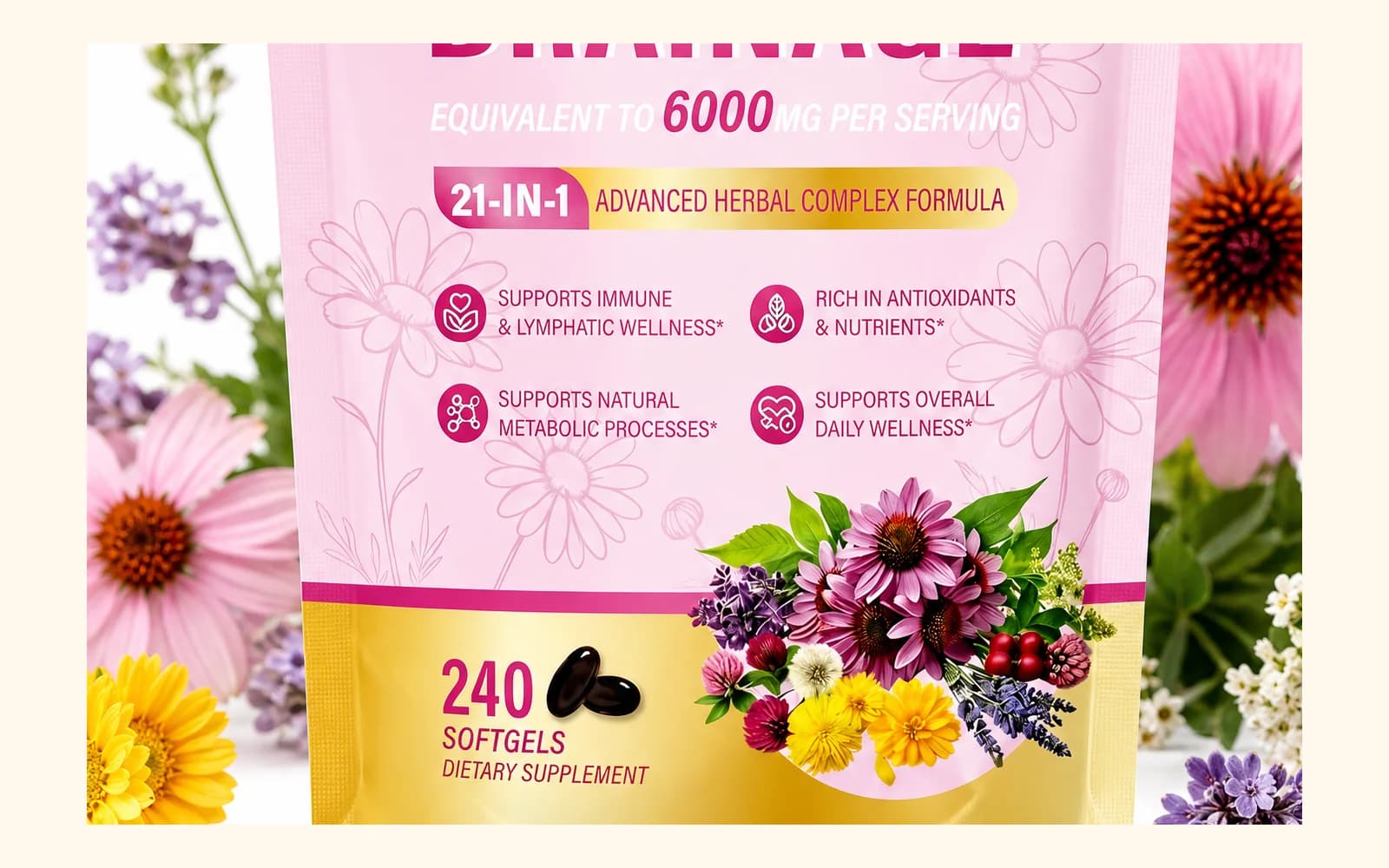
IRIDISYN original product photography.
Educational content only. This page does not diagnose or treat lymphedema, swelling, or any other medical condition. New, persistent, painful, red, warm, or one-sided swelling should be assessed by a qualified healthcare professional.
Key takeaways
- The best product is the one with an appropriate formula, transparent label, acceptable safety profile, and format you can use as directed - not the one with the biggest front-label number.
- A Supplement Facts panel can tell you what is in a product, but it does not prove that the finished formula improves lymphatic drainage.
- Third-party quality verification can support identity and manufacturing confidence; it does not establish clinical effectiveness.
- Persistent, painful, warm, red, sudden, or one-sided swelling needs medical assessment rather than supplement shopping.
What 'best' should mean in this category
Search results often define the best supplement by popularity, affiliate commission, ingredient count, or the strength of its marketing language. Those signals do not answer the questions that matter most: Does the label identify the formula clearly? Is the claim supported by relevant evidence? Are the cautions appropriate for you? Can you use the product consistently and exactly as directed?
Lymphatic drainage is also a particularly sensitive phrase. Lymphedema and unexplained swelling are medical issues with many possible causes. A dietary supplement should not be evaluated as though it were an alternative to diagnosis, compression, professionally directed exercise, skin care, or manual lymphatic drainage when those are clinically appropriate.
If you are still separating wellness language from medical treatment, begin with the lymphatic support guide before comparing products.
A seven-part supplement scorecard
Use the same scorecard for every candidate. A product that cannot provide basic information should not receive extra credit for testimonials, before-and-after imagery, or a long list of botanicals. Record the answers instead of relying on packaging impressions.
| Question | Stronger signal | Reason for caution |
|---|---|---|
| Formula | Species or common name, plant part, preparation, and amount are clear | Vague botanical names or an unexplained blend total |
| Evidence | Claims match research on a comparable ingredient and outcome | Cell, animal, or unrelated-condition studies presented as product proof |
| Safety | Warnings, allergens, other ingredients, and contact details are easy to find | Claims that natural means risk-free or suitable for everyone |
| Quality | Lot identity, traceability, and credible testing information are available | A seal-like graphic without a named standard or verifiable program |
| Serving | Serving size and directions are specific and practical | A bottle-size number presented as though it were a daily dose |
| Value | Cost is compared per labeled serving | Price comparisons based only on bottle or capsule count |
| Fit | Format works with swallowing, taste, travel, and storage needs | Absorption claims based only on liquid versus capsule format |
Read the complete label before the product page
Start with serving size, servings per container, and the amount per serving. Then identify every dietary ingredient and every other ingredient. For botanicals, look for the species, plant part, and form, such as powder or extract. If an extract ratio appears, treat it as processing information, not automatic proof of potency or benefit.
A proprietary blend may lawfully display a total amount while withholding the amount of each ingredient inside the blend. That makes meaningful comparisons harder. A large milligram number may also represent a raw-herb equivalent rather than the weight of the extract in the serving. The number is useful only when the label explains what it measures.
Use our lymphatic supplement ingredient guide as a field-by-field label checklist.
Choose evidence relevance over ingredient count
A 20-ingredient formula is not automatically stronger than a five-ingredient formula. Each added botanical creates another identity, dose, interaction, and evidence question. If the total serving remains small while the ingredient list grows, some ingredients may be present in modest quantities; the label may not disclose enough detail to know.
Ask whether human studies evaluated the same species, plant part, preparation, route, and approximate amount. Next, check the outcome. Evidence that an herb changes a laboratory antioxidant marker does not show that a finished multi-ingredient supplement reduces swelling or changes lymph flow in people. Traditional use is useful historical context, but it is a different category from controlled clinical evidence.
The FDA does not approve dietary supplements for safety and effectiveness before they reach the market. That makes claim scrutiny and complete-label review part of the buying decision, not optional fine print.
Understand what quality signals can and cannot prove
Independent certification or testing can help verify that a product contains listed ingredients, meets limits for selected contaminants, or follows a particular program. Look for the name of the testing organization and verify the product in that organization's directory when possible. A generic 'lab tested' statement without a report, program, or test scope gives you little to check.
Quality testing does not show that a product works for lymphatic drainage. It also does not make an unsuitable ingredient safe for a particular person. Manufacturing quality, ingredient safety, and clinical effectiveness are separate questions and should remain separate in your scorecard.
Compare format and value on equal terms
Drops can suit people who prefer a measured liquid; pills or softgels can suit people who prefer a pre-portioned serving. Neither format wins by default. Compare the complete formula, actual labeled serving, taste or swallowing preference, storage instructions, travel needs, and any other ingredients used to make the product.
Calculate value per labeled serving, not per bottle, ounce, or pill. Include the number of units required for one serving. Do not reduce the serving to make the bottle last longer or increase it to chase faster results unless the verified label or a qualified clinician directs that change.
For a detailed format decision, see lymphatic drainage drops versus pills.
For a concrete label comparison, review the package, serving, ingredients, and price shown for the IRIDISYN 12-in-1 Drops and IRIDISYN 21-in-1 Softgels. These are separate formulas, so compare the complete production labels rather than the front-label ingredient counts alone.
Red flags that should lower a product's score
Be cautious when a product promises to treat lymphedema, clear blocked lymph, melt cellulite, remove toxins, replace medical treatment, or create a guaranteed visual change. Testimonials cannot establish cause and effect, and an influencer's experience cannot identify the cause of another person's swelling.
- Disease-treatment promises or guaranteed outcomes
- Urgency tactics that discourage professional care
- No accessible Supplement Facts panel before purchase
- Unclear serving size, botanical identity, or blend amount
- Claims that liquid delivery guarantees superior absorption
- Quality badges that cannot be verified
- Advice to combine several overlapping products
A responsible final decision path
First, decide whether the goal belongs in a wellness routine or a healthcare visit. New or unexplained swelling belongs with a clinician. Second, eliminate products with unclear labels, unsuitable ingredients, or unsupported disease claims. Third, compare the remaining formulas using evidence relevance, safety, quality, cost per serving, and practical fit.
Before purchase, show the full label to a pharmacist or clinician if you use medicines, have a medical condition, are pregnant or breastfeeding, are preparing for surgery, or have a history of botanical allergies. Once you choose, follow one verified label at a time and keep a record of product, lot, serving, dates, and any unwanted effects.
Frequently asked questions
What is the best lymphatic drainage supplement?
There is no universally best product and no supplement is established as a treatment for lymphedema. Compare transparent labels, relevant evidence, safety, quality information, cost per serving, and routine fit.
Is a longer ingredient list better?
No. More ingredients add more identity, amount, interaction, and evidence questions. A shorter transparent formula may be easier to evaluate than a large proprietary blend.
Does third-party testing prove a supplement works?
No. Credible testing can support identity and quality within the program's scope, but it does not prove clinical effectiveness or personal suitability.
Are drops better absorbed than capsules?
Not as a general rule. Absorption depends on the ingredient and complete formulation. A liquid format alone does not prove faster or greater absorption or a better outcome.
Should I use a lymphatic supplement for swollen ankles?
Do not self-diagnose the cause of swelling. New, persistent, painful, warm, red, or one-sided swelling should be assessed promptly by a qualified healthcare professional.
- NCCIH: Using Dietary Supplements WiselyConsumer guidance on supplement evidence, safety, quality, and conversations with healthcare professionals.
- NIH Office of Dietary Supplements: Dietary Supplements - What You Need to KnowAn overview of dietary supplement labels, regulation, safety, and independent quality testing.
- FDA: Questions and Answers on Dietary SupplementsFDA explanations of premarket review, supplement claims, labeling, and regulatory responsibilities.
- FDA: Dietary Supplement Labeling GuideFDA guidance covering Supplement Facts and other required label information.
- Federal Trade Commission: Health Products Compliance GuidanceGuidance on the substantiation expected for health-related advertising claims.
- National Cancer Institute: LymphedemaPatient guidance on lymphedema symptoms, diagnosis, treatment, self-care, and urgent infection signs.
Sources are provided for transparency and further reading. Linking to an external source does not mean that the source endorses IRIDISYN or any IRIDISYN product.