Lymphatic Drainage Drops vs. Pills: How to Compare
Drops and pills can deliver botanical ingredients, but neither format is automatically stronger, faster, safer, or more effective. The useful differences are found in the complete formula and how the product fits real life.
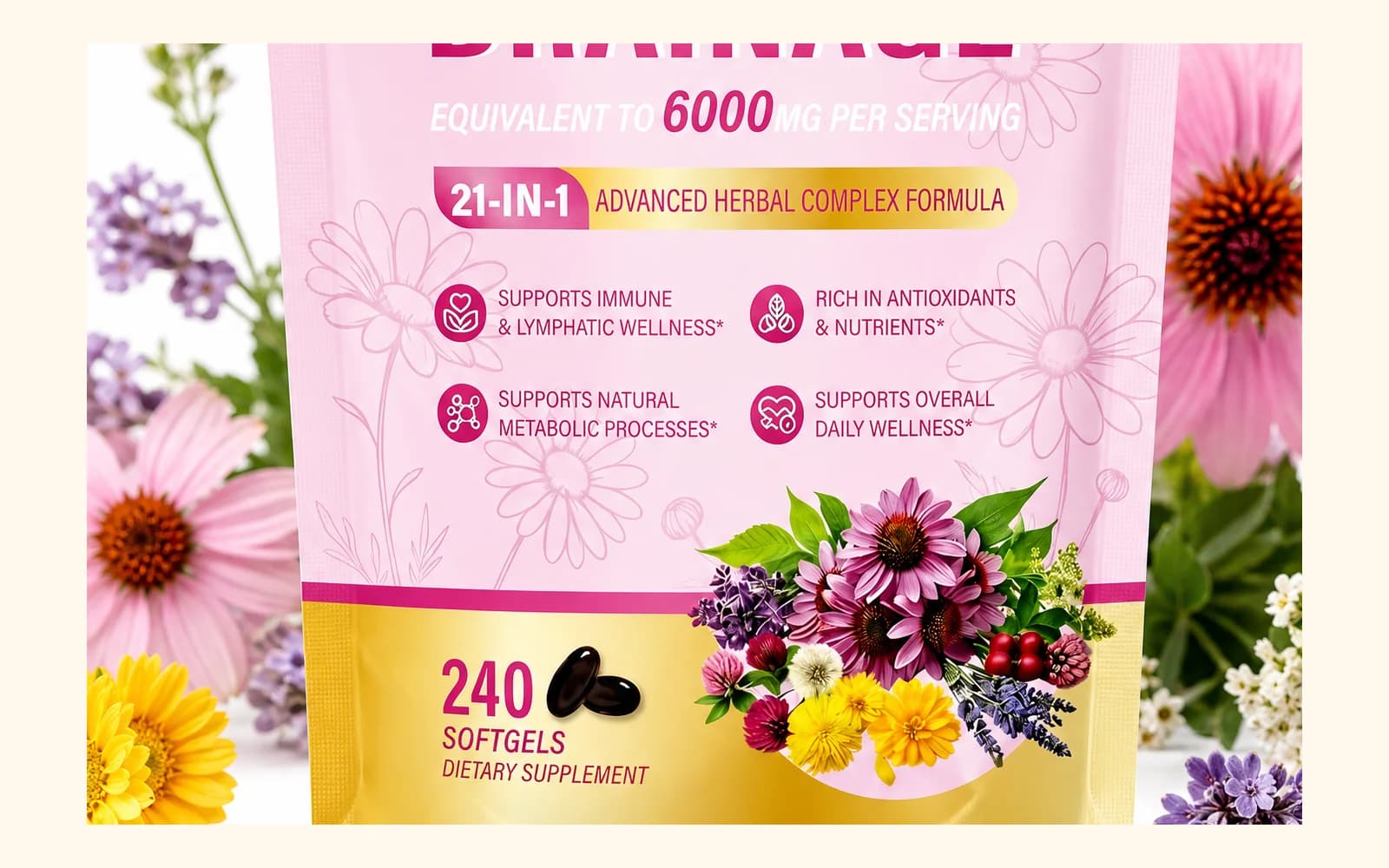
IRIDISYN original product photography.
Educational content only. This page does not diagnose or treat lymphedema, swelling, or any other medical condition. New, persistent, painful, red, warm, or one-sided swelling should be assessed by a qualified healthcare professional.
Key takeaways
- Compare exact formulas and labeled servings before comparing delivery formats.
- Liquid does not universally mean faster or better absorbed, and a pill does not universally mean a larger effective dose.
- Drops can offer a liquid routine; pills or softgels can offer pre-portioned portability. Both have measurement and safety considerations.
- Choose one verified label that fits your needs rather than stacking formats with overlapping ingredients.
Drops and pills are not automatically interchangeable
Two products can use different formats and still have identical active ingredients, but products in the lymphatic-support category often differ far beyond the shell or bottle. They may use different botanical species, plant parts, extraction methods, amounts, other ingredients, serving instructions, and blend structures.
That means a format comparison should not begin with which is stronger. Begin by asking whether the formulas are actually comparable. If one product lists individual amounts and another provides only a blend total, the labels do not offer the same level of information. If one uses nettle leaf and another uses nettle root, they should not be treated as the same ingredient.
The word pills can refer to tablets, hard capsules, or softgels. These forms use different materials and manufacturing methods. This guide uses pills as the broad consumer term and identifies softgels or capsules where the distinction matters.
Drops vs. pills at a glance
The most reliable differences are practical. They can help someone choose a format without implying an unproven medical advantage.
| Factor | Drops | Pills, capsules, or softgels |
|---|---|---|
| Serving | Measured with the supplied dropper or device | Usually pre-portioned by unit count |
| Taste | Flavor and botanical notes may be noticeable | Usually less taste during swallowing; aftertaste can still occur |
| Portability | Bottle needs secure storage and leak protection | Often easier to carry in the original container |
| Formula visibility | Check concentration, serving volume, solvent, and blend amounts | Check amount per serving, serving count, shell, oils, and other ingredients |
| Swallowing | Avoids swallowing a capsule | May not suit people who have difficulty swallowing pills |
| Measurement | Requires using the labeled measuring device consistently | Requires taking the labeled number of units |
| Stability and storage | May be sensitive to contamination, temperature, or light depending on formula | May be sensitive to heat, moisture, or softgel sticking depending on formula |
| Evidence | Must be shown for the exact formula and claim | Must be shown for the exact formula and claim |
Compare the serving—not the size of the bottle or pill
A large bottle can contain a dilute serving, and a small capsule can contain a concentrated extract. Visual size is not a reliable measure of ingredient amount or effect. Use the Supplement Facts panel to compare amount per labeled serving and the number of servings in the package.
For drops, confirm whether the serving is given in milliliters, a marked dropper volume, a number of drops, or another measure. Droplet size can vary with the liquid and dropper angle, so the labeled device and directions matter. Do not substitute a household spoon when the label calls for a measured dropper.
For pills, check whether the panel applies to one capsule or several. A bottle advertised as 240 softgels may provide 80 servings when the serving is three softgels. Compare price per labeled serving rather than price per unit.
Does liquid absorb better or work faster?
There is no universal yes. A liquid does not need a capsule shell to break apart, but absorption depends on the ingredient’s chemistry, concentration, formulation, food intake, digestive conditions, and other factors. Some ingredients dissolve readily in water; others are better carried in oil or require a specialized formulation.
A softgel can hold an oil-based fill, while a hard capsule may hold powder or granules. A liquid drop may be water-, glycerin-, alcohol-, or oil-based. Each can be appropriate for particular ingredients, but format descriptions alone do not establish bioavailability.
Even demonstrated higher blood exposure would not automatically prove a better lymphatic outcome. More exposure can change both potential effects and risk. Look for comparative evidence on the actual formulation and a meaningful outcome, not a generic statement that liquid equals faster.
Safety questions for each format
The active ingredients usually drive the largest safety questions, but format matters too. A liquid may contain alcohol, glycerin, flavors, sweeteners, preservatives, or carrier oils. A pill may contain gelatin, cellulose, colorants, flow agents, or oils used in a softgel fill.
Liquids require attention to contamination and storage. Avoid touching the dropper to the mouth unless the label specifically accounts for that use, close the bottle securely, and follow refrigeration or room-temperature instructions. Pills should be protected from moisture and heat and kept in the original labeled container.
Neither format removes interaction risk. Review the complete side-effects and safety guide if the formula contains multiple botanicals or if you use medicines, are pregnant or breastfeeding, are preparing for surgery, or have an ongoing health condition.
Choose the format you can use correctly
A format only helps when it is used according to a verified label. Someone who dislikes swallowing pills may be more consistent with drops. Someone who travels frequently or wants a pre-portioned routine may prefer capsules or softgels. Taste, texture, storage, and the number of daily units are reasonable decision factors.
Do not compensate for missed servings by doubling unless the label or a qualified professional specifically directs it. Do not alternate products as though a dropper and softgel deliver matching formulas. If switching formats, compare the labels from the beginning.
Use one product at a time when possible. Combining a drop formula with a pill formula can duplicate botanicals while hiding the combined amount. It also makes it harder to identify which product caused a reaction.
- Can you measure or count the serving accurately?
- Can you store and transport the package as directed?
- Are the taste, size, shell, solvent, sweetener, and other ingredients acceptable?
- Does the label disclose enough detail to compare with your medicines and allergies?
- Is the cost reasonable when calculated per labeled serving?
How to compare the two IRIDISYN formats
IRIDISYN offers a measured liquid format and a pre-portioned softgel format. They are separate formulas, not the same blend placed into two packages. Compare the complete production labels before choosing and do not use the formats as interchangeable servings.
The 12-in-1 Drops are presented in a 2 fl oz / 60 mL dropper bottle. The 21-in-1 Softgels are supplied as 240 softgels. Ingredient names, amounts, serving instructions, and warnings must be taken from the verified production label for each product.
Choose based on label transparency, ingredient suitability, other ingredients, serving directions, and format preference—not on an assumption that 21 is clinically stronger than 12 or that liposomal language guarantees a better result.
A note on current label verification
IRIDISYN’s site content is intentionally label-led. Final species, plant parts, extract ratios, amounts, and suggested use should be checked against the production package in hand before relying on a comparison. Where information has not been verified, it should remain unstated rather than inferred from an image or similar product.
Decision summary
Choose drops if a measured liquid suits your swallowing preference and routine, and if you are comfortable with its taste, storage, measuring device, and other ingredients. Choose pills or softgels if a pre-portioned format better suits your routine and the unit size, shell, serving count, and formula are acceptable.
Do not use format as a shortcut for efficacy. The evidence question remains the same for both: was a comparable finished formula tested for the specific outcome being claimed? Our review of typical category claims did not identify a basis for assuming that either format treats lymphedema or reliably improves lymphatic drainage.
Read Do lymphatic drainage drops work? for the evidence analysis, or return to the lymphatic support hub for the wider topic map.
Frequently asked questions
Are lymphatic drainage drops better than pills?
Not inherently. The better choice depends on the exact formula, verified label, safety profile, serving instructions, and which format the individual can use correctly. Neither format proves a lymphatic effect.
Do drops work faster than capsules?
A liquid avoids capsule disintegration, but that does not establish faster absorption or a faster meaningful outcome. The ingredient and complete formulation determine how it behaves.
Which format has a higher dose?
Bottle size and pill size cannot answer that. Compare the declared amount per labeled serving, the extract or powder type, and whether individual ingredient amounts are disclosed.
Can I take drops and softgels together?
Do not assume that stacking formats is useful or safe. Products may duplicate ingredients and increase interaction risk. Compare both labels and consult a pharmacist or clinician before combining them.
Which is easier to travel with?
Pills are often simpler to carry, while liquid bottles need leak protection and may be subject to travel liquid limits. Keep either format in its original labeled container and follow storage directions.
- NCCIH: Using Dietary Supplements WiselyConsumer guidance on supplement evidence, safety, quality, and healthcare conversations.
- NIH Office of Dietary Supplements: Dietary Supplements—What You Need to KnowAn overview of dietary supplement labels, regulation, safety, and quality.
- FDA: Dietary Supplement Labeling GuideFDA guidance covering Supplement Facts and other required label information.
- Federal Trade Commission: Health Products Compliance GuidanceGuidance on competent and reliable substantiation for health-related advertising claims.
- National Cancer Institute: LymphedemaPatient guidance on symptoms, diagnosis, treatment, self-care, and urgent infection signs.
Sources are provided for transparency and further reading. Linking to an external source does not mean that the source endorses IRIDISYN or any IRIDISYN product.