Dandelion for Lymphatic Drainage: Evidence, Diuretic Claims and Safety
Dandelion is often included in drainage and fluid-balance formulas, yet urinary output and lymphatic flow are not the same process. Understanding that distinction prevents a plausible-sounding claim from becoming stronger than the evidence.
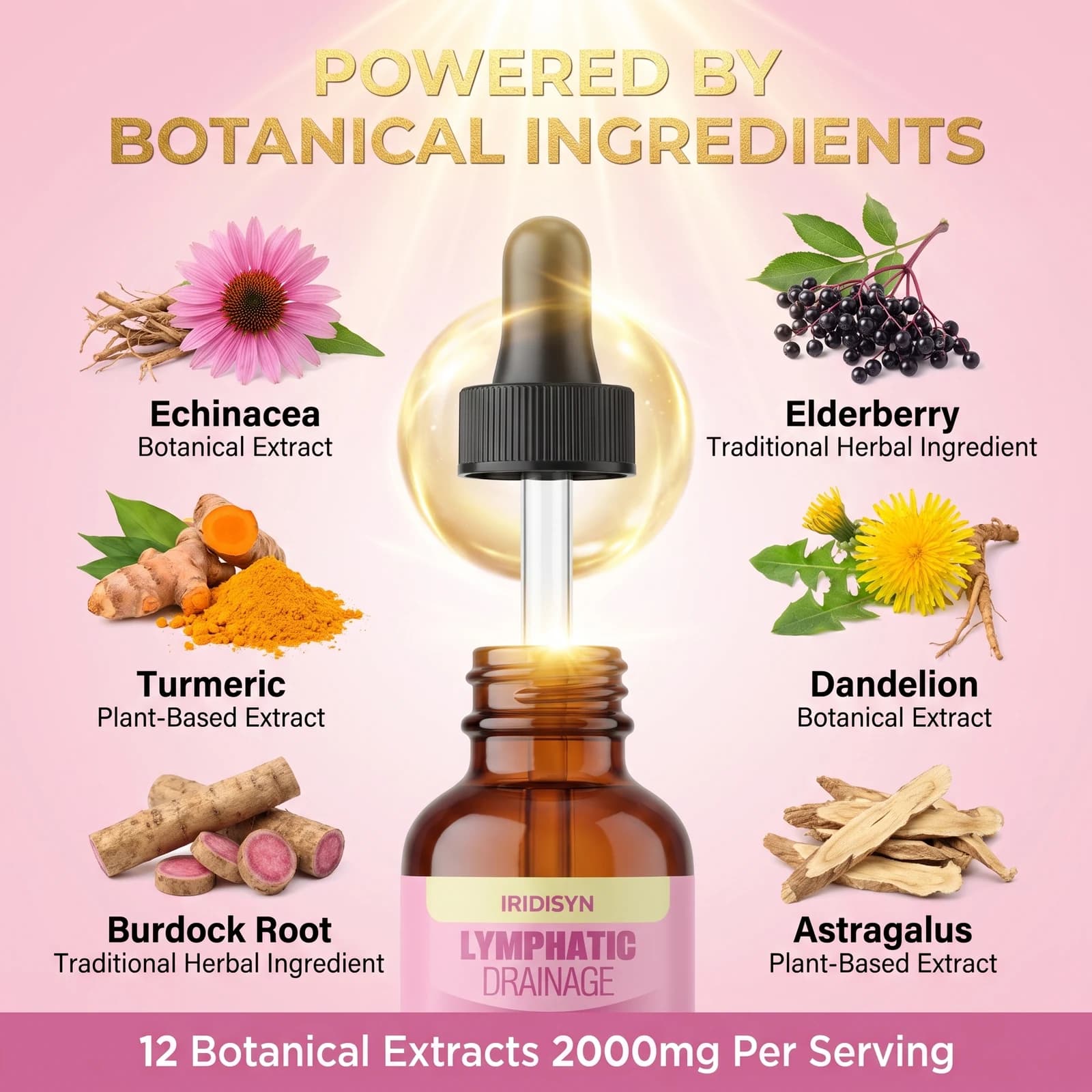
IRIDISYN original product artwork; shown for ingredient context, not as clinical evidence.
Educational content only. This page does not diagnose or treat lymphedema, swelling, or any other medical condition. New, persistent, painful, red, warm, or one-sided swelling should be assessed by a qualified healthcare professional.
Key takeaways
- Dandelion root and leaf are not interchangeable label details, and research on one preparation does not automatically apply to another.
- NCCIH reports no compelling scientific evidence supporting dandelion for any health condition and very little human research overall.
- A change in urination is not proof of increased lymph flow, reduced lymphedema, or removal of toxins.
- Dandelion may present allergy and medicine-interaction concerns, including theoretical interactions with water pills, diabetes medicines, anticoagulants, and antiplatelet medicines.
What is dandelion?
Dandelion, Taraxacum officinale, is a familiar flowering plant whose leaves, roots, and flowers have been used as foods and in traditional preparations. Supplements may contain root, leaf, whole-plant material, juice, tea, powder, tincture, or extract. These forms should not be treated as equivalent.
The plant part is especially important. Historical uses and official herbal monographs may describe root or aerial parts for different purposes and preparations. If a product simply says dandelion without identifying the part, it leaves a basic evidence and safety question unanswered.
Why dandelion appears in drainage formulas
Dandelion has a long history of traditional use, including preparations associated with digestion, appetite, and urinary function. Modern lymphatic formulas often connect that urinary association with words such as drainage, fluid balance, de-bloat, cleanse, or detox.
The connection needs scrutiny. The kidneys regulate water and electrolytes and produce urine. The lymphatic system collects interstitial fluid, transports immune cells and absorbed fats, and returns lymph to the circulation. Changing urinary frequency is not the same measurement as changing lymphatic transport.
What human evidence supports dandelion claims?
NCCIH states that very little research exists on dandelion's effects on human health and that there is no compelling scientific evidence supporting its use for any health condition. Preliminary laboratory studies have explored properties such as antioxidant and anti-inflammatory activity, but these are not clinical lymphatic outcomes.
A small or uncontrolled observation about urine output would not establish treatment of edema, lymphedema, bloating, or a visible change. To support a lymphatic claim, research would need to test a defined dandelion preparation in an appropriate human population and measure a relevant lymphatic endpoint.
This is the same evidence standard explained in Do lymphatic drainage drops work?.
Why 'diuretic' does not mean 'lymphatic drainage'
A diuretic increases urine production through kidney-related mechanisms. Lymphatic drainage refers to movement of lymph through lymphatic vessels and nodes. The systems interact within overall fluid balance, but the terms do not describe the same mechanism or clinical outcome.
This distinction matters because swelling has many causes. A person with venous disease, a blood clot, infection, heart or kidney disease, medication-related edema, or lymphedema needs the cause assessed. Trying to force fluid loss can be inappropriate and may complicate electrolyte balance or medical treatment.
| Observation or claim | What it may describe | What it does not prove |
|---|---|---|
| More frequent urination | A change in urinary output or fluid intake | Faster lymph flow |
| Lower scale weight for a day | Temporary change in water or intake | Loss of tissue fat or treatment of edema |
| Feeling less puffy | A subjective change with many possible influences | Treatment of lymphedema |
| Laboratory antioxidant activity | Chemical behavior in a test system | A visible or clinical benefit in people |
Dandelion safety, allergies, and interactions
NCCIH considers amounts commonly found in food likely safe, while less is known about larger supplemental amounts. Dandelion may cause an allergic reaction, particularly a concern for people sensitive to related plants such as ragweed, chrysanthemums, marigolds, and daisies, although the available evidence is conflicting.
NCCIH also notes theoretical reasons for interactions with antidiabetes medicines, anticoagulants, antiplatelet medicines, and water pills, among others. Safety information is limited for supplemental amounts during pregnancy and breastfeeding. Discuss a concentrated product with a pharmacist or clinician rather than assuming that a food plant is automatically safe at extract-level exposure.
How to compare dandelion products
Check Taraxacum officinale, root versus leaf or herb, powder versus extract, extract ratio when provided, amount per serving, and all other ingredients. Tea, tincture, capsule, and multi-herb drops may deliver very different preparations.
Do not compare two products by a single large number unless both labels define that number the same way. One may display actual extract weight while another displays a raw-herb equivalent or a total blend. A proprietary blend may make the dandelion amount impossible to determine.
Use the complete ingredient label guide before comparing prices or formats.
When swelling needs care instead of dandelion
Seek urgent assessment for sudden one-sided swelling, chest pain, shortness of breath, coughing blood, or a swollen area that becomes red, warm, and painful. Persistent or unexplained swelling also deserves evaluation even when it is mild.
If lymphedema has already been diagnosed, follow the care plan provided by the qualified team managing it. Do not replace compression, skin care, prescribed movement, infection precautions, or other treatment with an herbal product unless the treating team has specifically reviewed that choice.
Frequently asked questions
Does dandelion improve lymphatic drainage?
Direct human evidence showing that dandelion improves lymph flow is lacking. NCCIH reports very little human research and no compelling evidence for dandelion for any health condition.
Is dandelion root or leaf better for lymphatic support?
Neither has been established as better for lymphatic outcomes. Root and leaf are different ingredients, so the label and any cited research must be matched to the exact plant part and preparation.
Is dandelion a natural diuretic?
Dandelion has traditional urinary uses, but evidence is limited. Even if urinary output changes, that does not prove increased lymphatic drainage or treatment of swelling.
Can dandelion interact with medicines?
Potential concerns include water pills, antidiabetes medicines, anticoagulants, and antiplatelet medicines. Ask a pharmacist or clinician to review your full list.
Can dandelion treat lymphedema?
No established evidence supports dandelion as lymphedema treatment. Lymphedema requires professional assessment and an appropriate management plan.
- NCCIH: Dandelion - Usefulness and SafetyFederal consumer summary of dandelion research, uncertainty, safety, and possible interactions.
- European Medicines Agency: Dandelion RootEuropean herbal monograph materials distinguishing traditional use from established clinical evidence.
- NCCIH: Using Dietary Supplements WiselyConsumer guidance on supplement evidence, safety, quality, and conversations with healthcare professionals.
- NIH Office of Dietary Supplements: Dietary Supplements - What You Need to KnowAn overview of dietary supplement labels, regulation, safety, and independent quality testing.
- National Cancer Institute: LymphedemaPatient guidance on lymphedema symptoms, diagnosis, treatment, self-care, and urgent infection signs.
Sources are provided for transparency and further reading. Linking to an external source does not mean that the source endorses IRIDISYN or any IRIDISYN product.