How Long Do Lymphatic Drainage Drops Take to Work?
There is no established timeline that applies to the whole drops category. A useful timeline would come from research on the finished formula and the outcome you want to measure. Personal reports can tell you when someone noticed a change under their own circumstances.
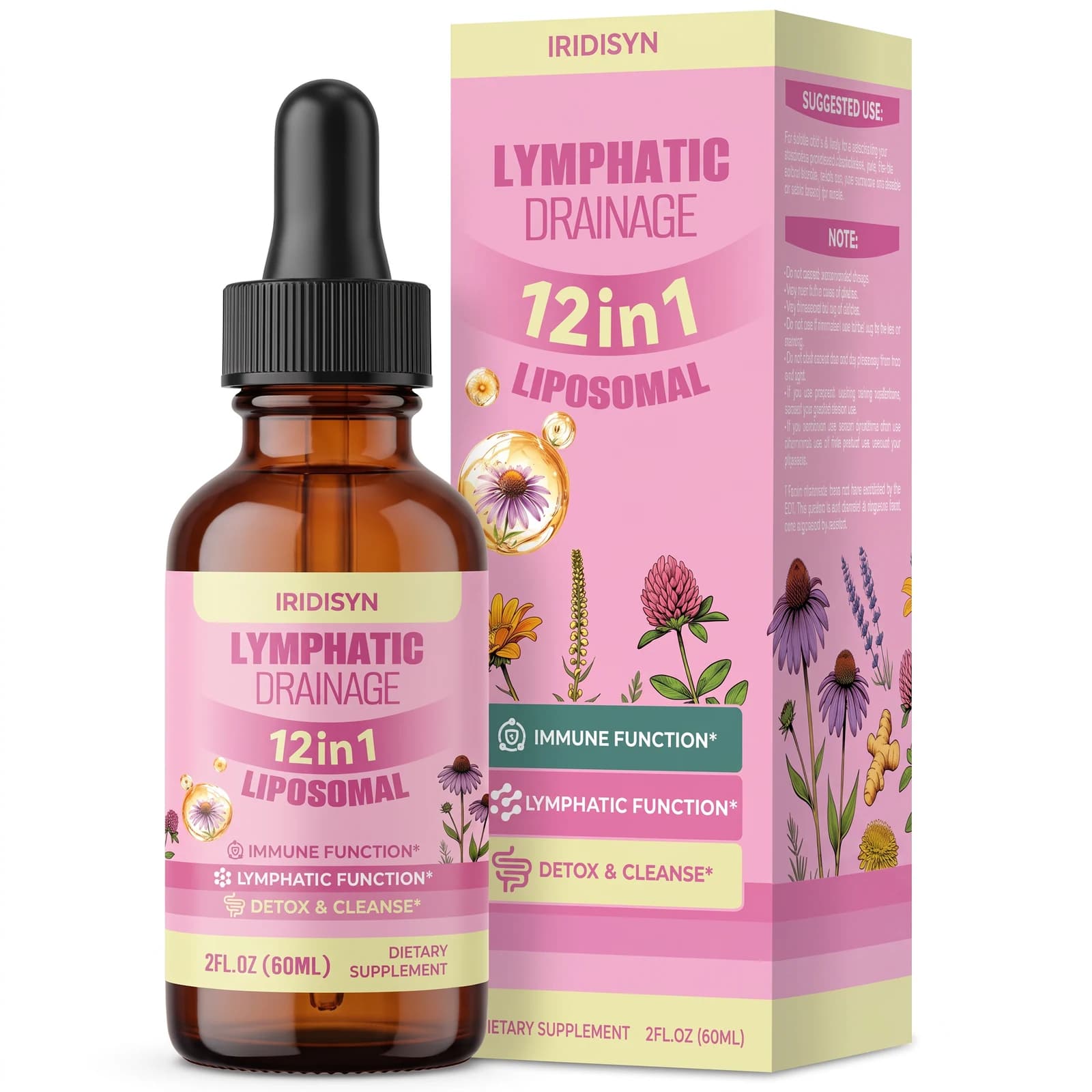
© IRIDISYN. Original asset from the IRIDISYN media library.
Educational content only. This page does not diagnose or treat lymphedema, swelling, or any other medical condition. New, persistent, painful, red, warm, or one-sided swelling should be assessed by a qualified healthcare professional.
Key takeaways
- No established timeline applies across lymphatic drainage drops because formulas, servings, claims, and users differ.
- A change in urination, scale weight, or subjective puffiness is not direct proof of improved lymphatic flow.
- Do not increase the serving or stack products because a result is not noticeable; follow the verified label.
- Persistent or concerning swelling needs professional assessment rather than a longer supplement trial.
Define the result you are asking about
Define what you would count as a change before you compare dates. Appearance, how a garment fits, and a clinically measured result are different observations.
Subjective change and measured outcomes
Lymphatic drainage drops are a retail category, not a standardized intervention. Two products may share the same phrase while using different species, plant parts, extracts, amounts, other ingredients, and serving directions. A timeline from one formula cannot automatically be applied to another.
More importantly, a timeframe requires evidence that an effect occurs. Direct, high-quality human research on finished over-the-counter lymphatic drop formulas and clinically meaningful lymphatic outcomes is limited. Without that foundation, a precise promise such as works in 24 hours or visible results in seven days is not a reliable scientific conclusion.
Marketing often combines several different outcomes: feeling lighter, urinating more, seeing less puffiness, losing water weight, having more energy, detoxing, improving circulation, or treating swelling. These are not interchangeable, and some are too vague to measure.
A useful outcome is specific and appropriate. Taste, convenience, and whether the format fits a routine can be evaluated directly. A medical outcome, such as reduced lymphedema volume or treatment of edema, requires proper diagnosis, validated measurement, relevant clinical evidence, and professional oversight.
| Observation | Possible interpretation | Cannot establish by itself |
|---|---|---|
| More urination | A change in fluid intake or urinary output | Improved lymph flow |
| Short-term scale change | Water, food, or bowel-content variation | Fat loss or treatment of swelling |
| Feeling less puffy | A subjective change influenced by many factors | Cause, mechanism, or lymphedema improvement |
| Easy daily use | The format fits the routine | Clinical effectiveness |
What can support a timeline?
Check the study duration, which product was tested, and when the outcome was measured. A report about a different formula or a different outcome gives limited guidance for your bottle.
Specific formulation and study duration
Daily appearance and sensation can change with sodium and carbohydrate intake, hydration, menstrual cycle, temperature, posture, travel, sleep, activity, alcohol, bowel habits, medicines, and health conditions. These factors can create a before-and-after impression even when they were not controlled.
Expectation and selective recall also matter. People may notice a good day after starting a product and overlook similar days before it. Testimonials tend to highlight strong experiences, while neutral or negative experiences may be less visible. That is why anecdotes cannot create a dependable timeline.
Anecdotes and confounding changes
A laboratory study can identify a possible mechanism but cannot tell consumers how quickly a finished supplement works. A study of one botanical for an unrelated outcome cannot establish the timing of a multi-herb drainage blend. Even a human trial applies most directly to the tested preparation, amount, population, outcome, and duration.
For the broader claim analysis, read Do lymphatic drainage drops work?. The answer should come before the stopwatch.
Track what changes consistently
Choose a consistent time and condition for recording observations. Keep notes on other changes during the same period. If you are tracking a symptom that concerns you, discuss it with a clinician. The observation worksheet can help organize the record.
Choose a baseline
Confirm that the product is appropriate with a healthcare professional when medicines, health conditions, surgery, pregnancy, breastfeeding, or allergy concerns apply. Choose one product, follow one verified label, and record the start date, lot, serving, timing, and any unwanted effects.
Decide in advance what observation is reasonable, how it will be tracked, and when you will stop. Do not extend use indefinitely because a result is always expected next week. The label's intended duration and any professional advice should guide the review point.
Use the before-and-after tracking guide to reduce recall bias.
When to seek individual advice
New, persistent, worsening, painful, warm, red, or one-sided swelling should be assessed. Sudden swelling with chest pain, shortness of breath, or coughing blood can be an emergency. A supplement timeline should never delay evaluation.
For diagnosed lymphedema, management can include compression, exercise, skin care, and manual lymphatic drainage within a professional plan. Over-the-counter drops have not been established as a replacement for that care.
Evaluate the claim before extending use
Use the label to guide the serving and schedule. Bring a timeline claim to the drops evidence guide and check the safety guide before changing your routine.
Read the label and review the evidence
Taking more than the label directs can increase exposure and the risk of side effects or interactions without providing a benefit. Combining drops, capsules, teas, and powders can also duplicate ingredients while hiding the total amount across several labels.
Do not interpret digestive upset, frequent urination, dizziness, or dehydration symptoms as proof that a cleanse is working. An adverse effect is a reason to pause and seek appropriate advice, not a milestone on the way to results.
No credible universal countdown exists for lymphatic drainage drops. Evaluate the exact finished formula and exact claimed outcome, follow the label, and treat format convenience as different from clinical effectiveness.
If a product promises guaranteed results by a precise deadline without comparable human evidence, the precision is a marketing feature rather than a trustworthy estimate.
Frequently asked questions
Can an online testimonial establish a time to effect?
A testimonial can say when a person noticed something. A study with an appropriate comparison group is better suited to testing whether the product caused a change and how long it took.
Which changes should I record before comparing two weeks?
Write down your starting observation, the date and conditions, and other routine changes. Record observations consistently so you can see whether the comparison is meaningful.
- FDA 101: Dietary Supplements
- NCCIH: Using Dietary Supplements Wisely
- NIH Office of Dietary Supplements: Dietary Supplements - What You Need to Know
- National Cancer Institute: Lymphedema
- Federal Trade Commission: Health Products Compliance Guidance
Sources are provided for transparency and further reading. Linking to an external source does not mean that the source endorses IRIDISYN or any IRIDISYN product.
Published by a supplement brand, not an independent clinical review service. Read our editorial standards or report a correction.