Echinacea Supplements: Evidence, Labels, and Safety
An echinacea supplement is not automatically a lymphatic treatment. Identify the species, plant part, and preparation first, then ask whether the research actually addresses the outcome you care about.
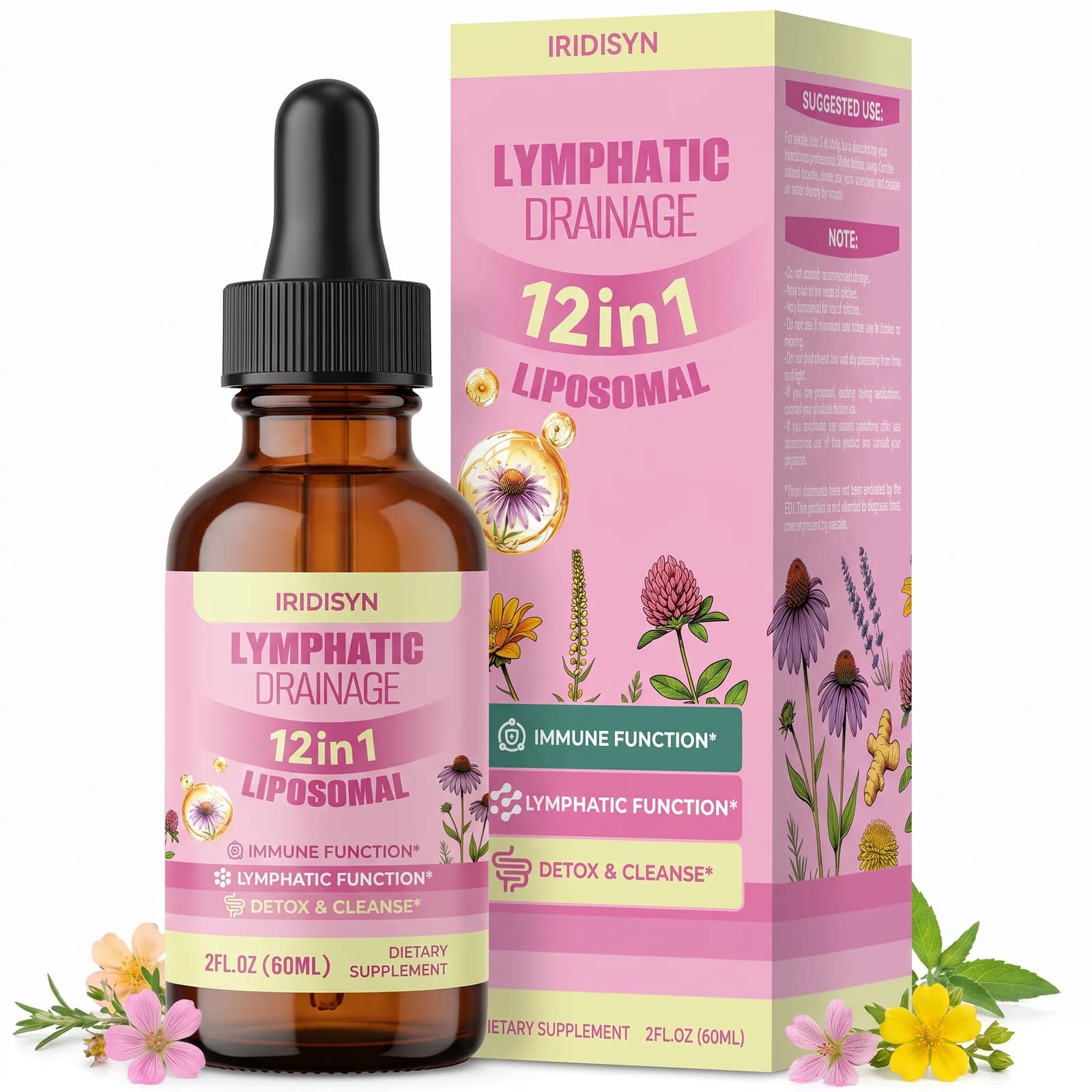
IRIDISYN-supplied product artwork. Package claims are not clinical evidence; compare the final label. No stock or AI-generated botanical photograph is used.
Educational content only. This page does not diagnose or treat lymphedema, swelling, or any other medical condition. New, persistent, painful, red, warm, or one-sided swelling should be assessed by a qualified healthcare professional.
Key takeaways
- Echinacea is a botanical name, not a guarantee of a specific effect.
- Cold research does not establish a lymphatic-drainage benefit.
- Species, parts, and extracts should not be treated as interchangeable.
- Allergy and medicine questions belong in the decision, not after it.
What is an echinacea supplement?
Echinacea products can use Echinacea purpurea, E. angustifolia, or E. pallida. NCCIH describes the plant as closely related to daisies and ragweed. A label that says only echinacea leaves the species and plant part unclear.
For comparison purposes, distinguish a named single-botanical preparation from a formula that merely includes echinacea among several ingredients. A prominent flower on the front panel does not tell you which part was used or how much is present in a serving. Photograph the actual ingredient panel before making a comparison.
What does the research support?
NCCIH reports that echinacea may slightly reduce the chance of catching a cold, while whether it shortens a cold remains unclear. That summary is about respiratory outcomes, not proof of lymphatic drainage.
Our interpretation: even a positive trial would need to match the species, preparation, participants, and measured outcome before it could support a claim about a different product. Asking whether echinacea works is therefore incomplete. A more useful question is: works in which preparation, for which outcome, compared with what?
Species and plant part are separate fields
Imagine one label specifies a root extract while another specifies aerial parts, and a third supplies only the common name. They share a familiar word, but the comparison still has unresolved variables. Record those differences rather than collapsing them into a single echinacea dose.
If a study names a particular species and extraction method, keep that description beside the product label. A match in genus alone is a weak bridge. A mismatch is not proof of poor quality; it is a reason not to transfer the study's result to the product without further evidence.
Liquid, capsule, and blend comparisons
A dropper, capsule shell, and multi-herb blend solve different practical problems. Compare measuring convenience, taste, swallowing preference, storage, and the complete ingredient statement. None is a shortcut to an immune or lymphatic claim.
In a blend, the total amount may not reveal the individual echinacea amount. Likewise, an extract ratio without a marker measurement does not establish the concentration of a particular constituent. Mark these as different types of information, not numbers that can be freely substituted.
Allergies, side effects, and medication questions
NCCIH notes possible severe allergic reactions and digestive symptoms. It also describes uncertainty about some drug interactions and possible concerns with immunosuppressants. Pregnancy and breastfeeding questions require individual professional advice.
Do not interpret a new rash or an unpleasant reaction as evidence that the product is cleansing. Save the package and tell the professional exactly what was taken. A list of botanical names is more useful for this conversation than a slogan such as immune support.
A practical two-label comparison
Put the complete labels side by side, not just the front panels. Write down the botanical name and part, preparation, declared amount per serving, and any disclosed marker compound. Leave an empty field marked unknown; do not fill it with an assumption from a similar-looking bottle.
Then write the question you want the product to answer. A readable ingredient list answers what is declared in the formula. It does not answer whether that formula has been tested for your intended outcome. Keeping those questions separate prevents a familiar plant name from doing the work of a clinical study.
| Record | Why it matters | If missing |
|---|---|---|
| Species and plant part | Similar common names can describe different preparations | Ask for the complete ingredient statement |
| Amount per labeled serving | One capsule or one drop may not be a serving | Do not estimate from package size |
| Extract and marker details | A ratio is not a measured active-compound percentage | Treat composition as unresolved |
| Finished-product evidence | An ingredient paper is not automatically a formula trial | Do not assume the claimed outcome |
Questions to take to your pharmacist or clinician
Bring photographs of all label panels and a list of medicines and other supplements. Ask about this complete formula rather than asking only whether the plant is natural. State why you are considering it, whether you have symptoms, and whether any prescribed care would change. This page does not set a personal serving or duration.
- Does the exact preparation change the safety discussion?
- Do any ingredients duplicate another product I use?
- Is there a reason to avoid this formula given my medical history?
- Which symptom would mean stopping rather than increasing the serving?
IRIDISYN label context: echinacea
The following information is drawn from the current product catalog. Inclusion in a formula is not evidence that the ingredient or finished product improves lymphatic drainage.
| Formula | Package | Catalog serving information |
|---|---|---|
| 12-in-1 Drops: compare the complete label | 2 fl oz / 60 mL | Dropper format |
| 21-in-1 Softgels: compare the complete label | 240 softgels | 3 softgels · 80 servings |
These are multi-ingredient dietary supplements, not single-herb medicines. Confirm botanical identity, amounts, other ingredients, warnings, and suggested use on the final package. A generic dropper-format description is not a verified liquid dose.
Frequently asked questions
What is echinacea good for?
Research has focused largely on colds and respiratory infections, with limited and mixed conclusions. It should not be repurposed into a claim that echinacea supplements improve lymphatic drainage.
Can I take echinacea every day?
This guide does not establish a daily-use duration. Use the actual label and ask a healthcare professional about the exact preparation and your circumstances rather than extrapolating from a short study.
Are echinacea drops better than capsules?
Format alone cannot establish better outcomes. Compare the exact preparation, declared serving, other ingredients, and measuring or swallowing needs.
What should I not take with echinacea?
Give a pharmacist the complete formula and medicine list. Potential immunosuppressant concerns and uncertainty around other interactions make a universal combination list unreliable.
Does an echinacea ingredient prove a lymphatic effect?
No. Ingredient inclusion and evidence for the finished formula are different questions.
- NCCIH: EchinaceaSpecies, cold-research limitations, allergic reactions, and safety questions.
- NIH ODS: Dietary Supplements — What You Need to KnowLabel, quality, and safety background; not an endorsement of this brand.
- NCCIH: Using Dietary Supplements WiselyHow to evaluate evidence and discuss supplements with a healthcare professional.
- FDA: Questions and Answers on Dietary SupplementsThe distinction between a dietary supplement and an approved medicine.
- National Cancer Institute: LymphedemaClinical care context; ingredient inclusion is not lymphedema treatment.
Sources are provided for transparency and further reading. Linking to an external source does not mean that the source endorses IRIDISYN or any IRIDISYN product.
Published by a supplement brand, not an independent clinical review service. Read our editorial standards or report a correction.